
A species’ vulnerability to climate change depends on its exposure, sensitivity, and adaptive capacity to climate change. Adaptive capacity can be defined as a species’ ability to tolerate or adapt to climate change. To inform the recent update to Michigan’s State Wildlife Action Plan (SWAP), the Michigan Department of Natural Resources and Michigan Natural Features Inventory (MNFI) worked with partner states in the Midwest to assess the adaptive capacity of 538 Species of Greatest Conservation Need (SGCN).

We assessed these species’ adaptive capacity based on 37 life history, ecological, and evolutionary attributes. While adaptive capacity is only one component of a species’ overall climate vulnerability, it is the component that managers have the most ability to address. Results from this analysis will help managers develop and implement conservation actions that target climate vulnerabilities of specific species, while also allowing for prioritization of climate adaptation programs that would benefit large numbers of SGCN in a strategic and efficient manner.

Yu Man Lee and Ashley Cole-Wick will present an overview of the adaptive capacity assessment that was conducted, highlighting some examples of wetland species and focal species in Michigan’s SWAP and recommendations for conservation actions based on assessment results.

Online via ZOOM (Registrants will receive a Zoom link before the webinar)
Free for MWA members
Become a member for $25 to enjoy our webinar series!
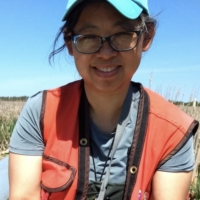

Guest Speaker
Yu Man Lee
Michigan Natural Features Inventory
Yu Man has almost 30 years of experience working as a conservation scientist and herpetologist with the Michigan Natural Features Inventory (MNFI). She has extensive experience working with diverse partners to conduct research, management, and education and outreach to inform and facilitate conservation of Michigan’s biodiversity, particularly rare amphibians and reptiles and their habitats, especially wetlands. Yu Man currently co-chairs the Michigan Rare Turtle Working Group, leads the Inventory and Monitoring Subcommittee of the Michigan Eastern Massasauga Working Group, and has served on the Michigan Amphibian and Reptile Technical Advisory Committee and the Board of Directors for the American Turtle Observatory. She also co-chairs the Michigan Vernal Pools Partnership, helps coordinates the Michigan Vernal Pool Patrol, a statewide, community science-based vernal pool mapping and monitoring program, and is a former board member and an active member of the Michigan Wetlands Association.
Ashley Cole-Wick
Michigan Natural Features Inventory
Ashley joined MNFI in 2018 after spending the last 6 years working as a biologist in Kalamazoo, MI where she led projects on imperiled Lepidopteran species, fire effects, and climate change. In Michigan, she has worked extensively with many imperiled butterfly species, including the federally endangered Mitchell's satyr butterfly, for which she established a captive propagation program and facility. The conservation of rare habitats is what motivates Ashley's career in the natural sciences. She is an active member of the Lepidopterists' Society, fluent in climate change interpretation, and earnestly enjoys helping people better understand the natural world around them.