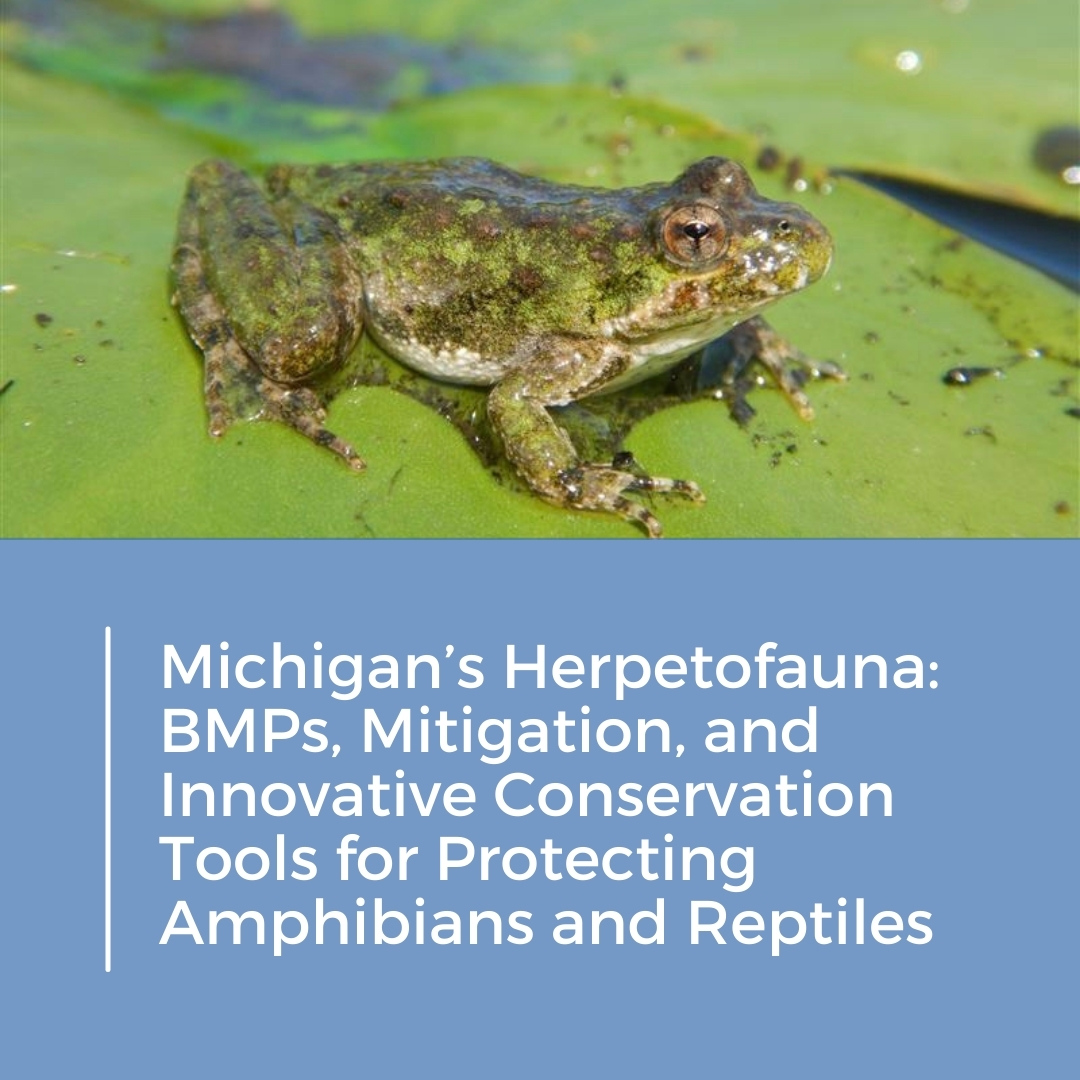
Name of Class: Michigan’s Herpetofauna: BMPs, Mitigation, and Innovative Conservation Tools for Protecting Amphibians and Reptiles
Dates: August 19-20, 2026
Location:
Classroom Portion:
Michigan Nature Association
2310 Science Pkwy, Okemo, Michigan
Field Portion:
Various areas in and around Okemos/Lansing
Time(s): 8:30am to 4:30pm
Instructor: Dave Misfud
Cost: $275 (MWA members), $325 (non-members)
Click here to become a MWA member.
Class Description: Amphibians and reptiles (collectively regionally referred to as herpetofauna) are critical indicators of ecosystem health. Their conservation requires a clear understanding of threats and effective strategies to reduce them. This 2-day workshop will present Best Management Practices (BMPs) for restoring and enhancing herpetofauna habitats across Michigan, focusing on practical applications in land development, habitat connectivity, and impact mitigation/restoration. Discussions will draw from the updated Michigan Amphibian & Reptile Best Management Practices (Third Edition) and explore how to apply these guidelines in real-world scenarios.
Additionally, participants will be introduced to the Michigan Herpetofauna Habitat Assessment Tool (Herp HAT), a first-of-its-kind, scientifically supported tool designed to assess wetland and upland habitat quality using both amphibian and reptile community metrics such as species richness, rarity, and disturbance tolerance. The tool offers a rapid, field-based method for evaluating ecosystem health and informing conservation actions.
The workshop will include hands-on training in using Herp HAT and conducting field surveys via the Survey123 app. Attendees will practice applying BMPs and habitat assessment techniques in a field setting, integrating science with practical management for the protection of Michigan’s herpetofauna.
Instructor Bio:
David Mifsud (Turtle Dave) is the Senior Herpetologist and owner of Herpetological Resource and Management (HRM), a firm dedicated to the conservation and stewardship of amphibians and reptiles. With over 30 years of experience in wildlife biology, wetland ecology, and habitat management, David specializes in herpetofauna research, assessment, and restoration across Michigan, the Great Lakes region, and abroad.
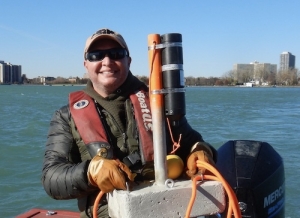 He holds professional certifications as a Wetland Scientist (Society of Wetland Scientists), Senior Ecologist (Ecological Society of America), and Wildlife Biologist (The Wildlife Society). David is widely recognized for his contributions to herpetological conservation and community engagement, including authorship of the Amphibian & Reptile Best Management Practices for Michigan (3rd Edition) and co-authorship of Amphibians and Reptiles of the Great Lakes Region (Revised Edition). He also coordinates the Michigan Herpetological Atlas and serves as Co-Chair of the Michigan Amphibian and Reptile Technical Advisory Board.
Internationally, David is recognized by the IUCN Tortoise and Freshwater Turtle Specialist Group as an expert in Great Lakes and African chelonian conservation. He is the lead author of the IUCN Redlist Assessment for Blanding’s Turtles and co-author of the assessment for Home’s Hinge-back Tortoise. He is also the founder and President of the Michigan Amphibian and Reptile Conservancy (MARC). As sought-after speaker, David regularly leads workshops and presentations on species identification, ecology, and conservation best practices.
Class Cancellation Notification
Five (5) days prior to the start of class, participants will be notified of a cancellation. The MWA Treasurer will refund 100% of the fee received to participants.
Cancellation Policy for Attendees
- Any attendee can transfer, at any time, their spot in the class to another person with no financial penalty.
- Cancellation prior to 14 days of the class is eligible for 100% refund of class fees.
- Cancellation from 1-13 days of the class is eligible for 50% refund of class fees.
- Cancellation within less than 1 day of start of the class (including during the class) is not eligible for any refund (0%), however the spot can be transferred to any other person.